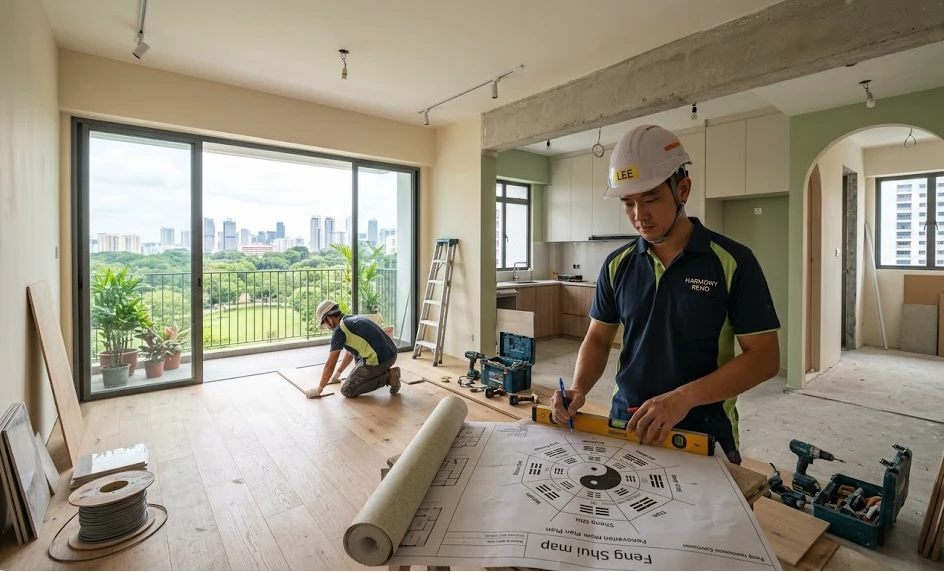
Beyond Superstition: A Data-Driven Guide to Feng Shui Renovations in Singapore
Modern feng shui renovation is less about mystical symbols and more about how layout, clutter, lighting and workflow affect stress, sleep and daily comfort in Singapore homes.
Modern feng shui can be treated as practical spatial planning: sightlines, flow, lighting, storage and daily routines before decoration.
For Singapore HDB and condo renovation, a modern feng shui approach works best when it is translated into practical design decisions: calmer layouts, better storage, clearer circulation, layered lighting and comfortable bedroom planning. The goal is not superstition. The goal is to reduce visual stress, improve daily routines and avoid renovation regrets that are expensive to fix later.
Think psychology before symbolism
Clutter, blocked walkways, poor lighting and cramped furniture placement affect how a home feels long before decorative style matters.
Plan for compact Singapore homes
HDB and condo layouts need careful circulation, storage and lighting because small mistakes become obvious in daily living.
Use Japandi as a wellness language
Warm oak tones, soft neutrals, hidden storage and calm material palettes support low-visual-noise interiors.
Why Singapore homeowners are rethinking feng shui
Many homeowners still associate feng shui with superstition, lucky objects or symbolic rules. But when the mystical layer is removed, many ideas overlap with environmental psychology: how humans respond to light, clutter, movement, safety and visual order.
This matters in Singapore because HDB and condo homes are compact. A poor layout can make the home feel heavier, darker and more stressful even if the renovation looks good in photos. A good layout makes daily living smoother without needing excessive decoration.
For ID Work Studio, the useful question is not whether a mirror, coin or ornament brings luck. The useful question is whether the home supports calmer routines, better sleep, smoother cooking, easier storage and less renovation regret.
Clutter, cortisol and mental fatigue
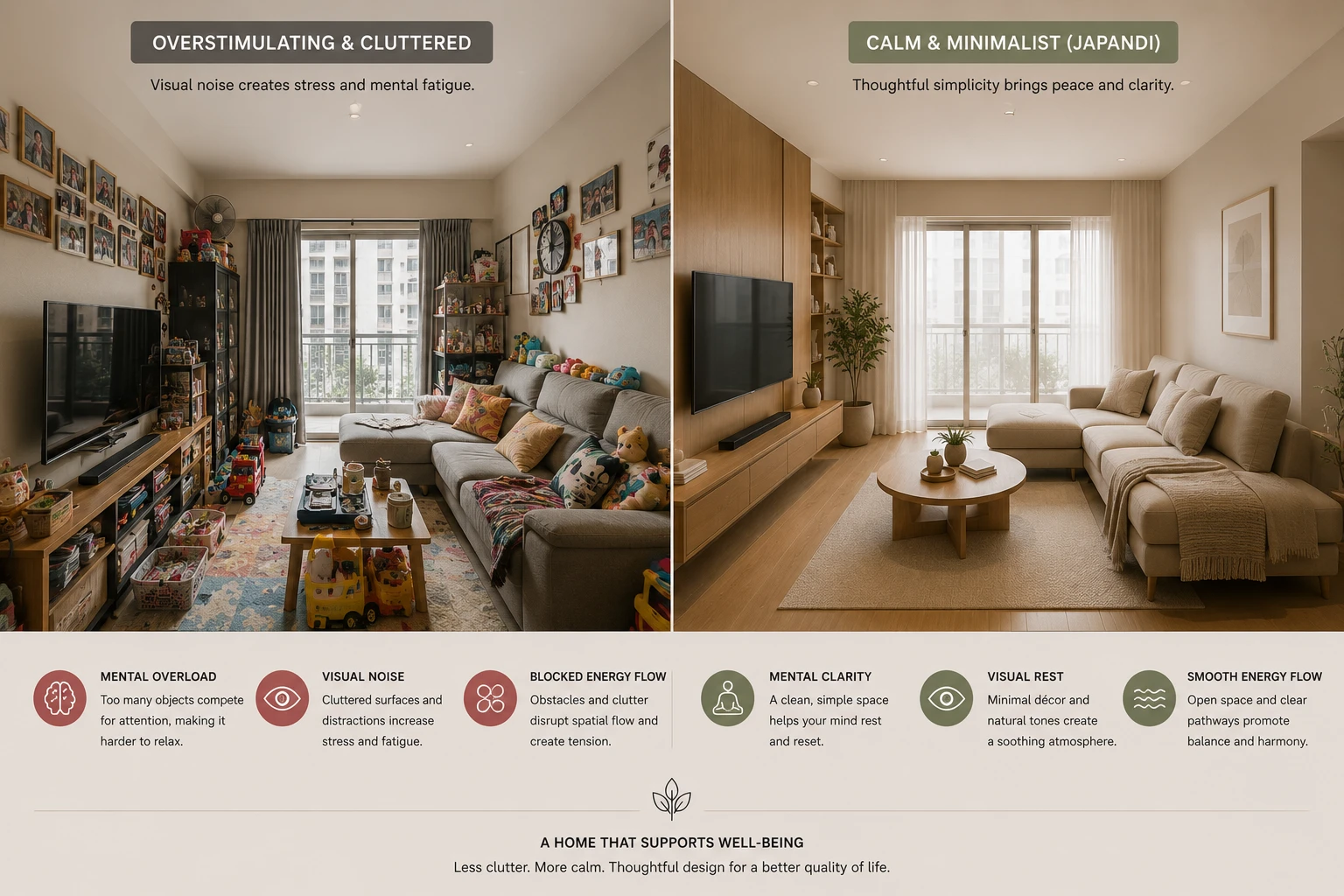
A cluttered home is not just visually messy. It creates more things for the brain to process, which can make the space feel noisy, unfinished and harder to relax in.
- Open shelves without discipline can create constant visual reminders of unfinished tasks.
- Poor storage planning pushes items onto dining tables, bay windows, kitchen counters and bedroom corners.
- Too many competing materials, colours and feature walls make compact homes feel smaller.
- A calmer renovation starts with storage zones, not with buying more decorative items.
Clutter versus calm: the same HDB-scale space can feel stressful or composed depending on storage, sightlines and visual noise.
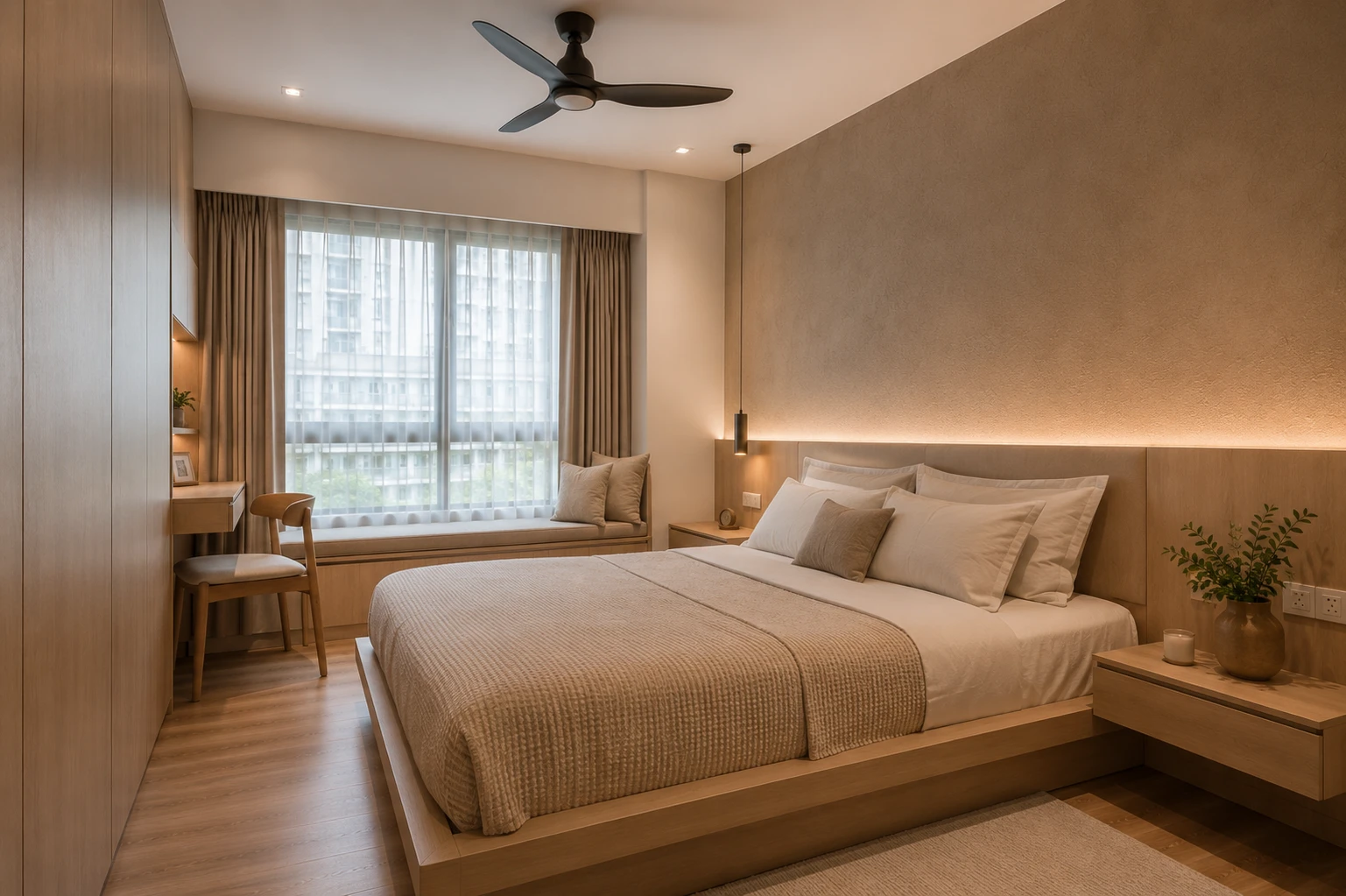
The bedroom command position is really about psychological safety
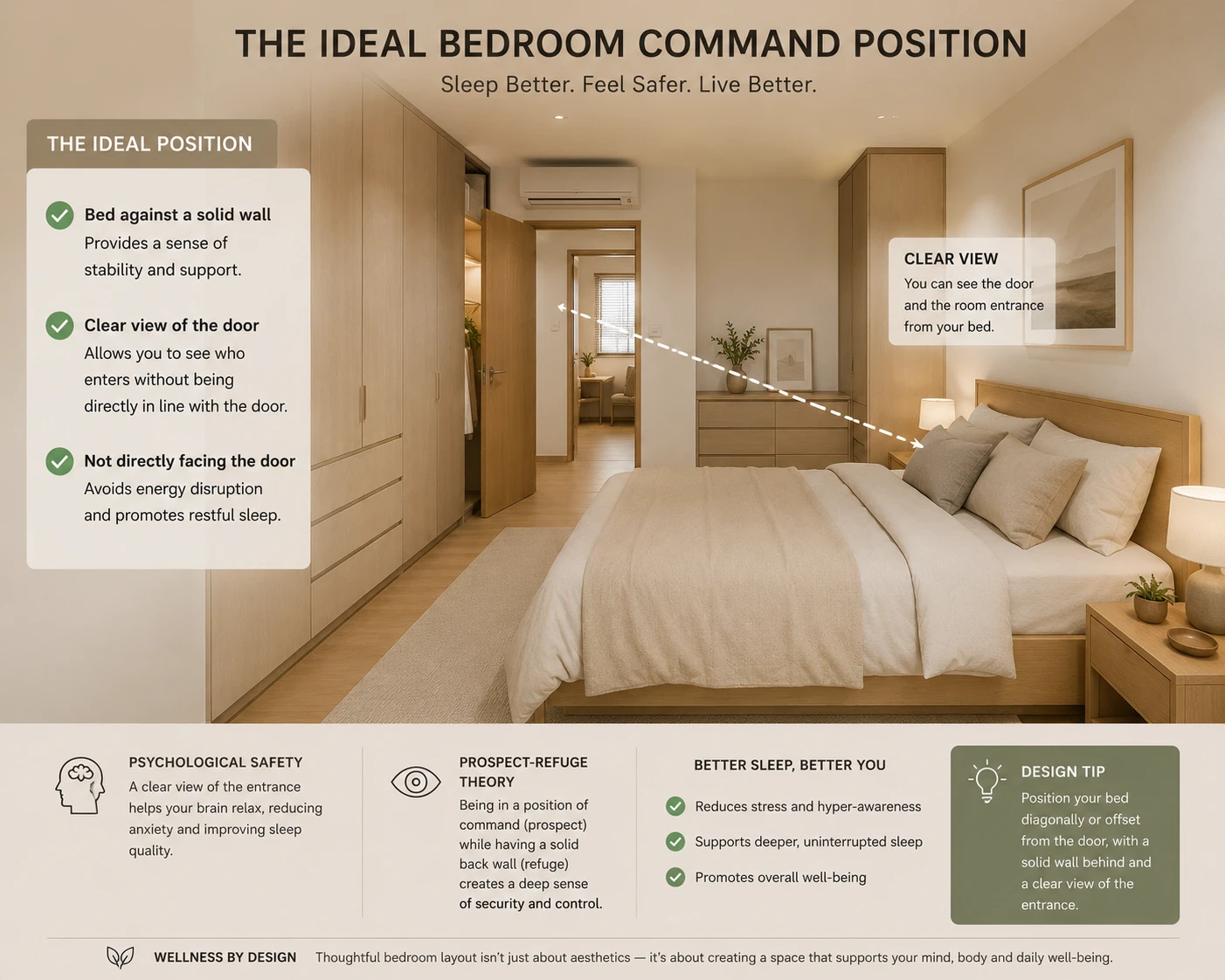
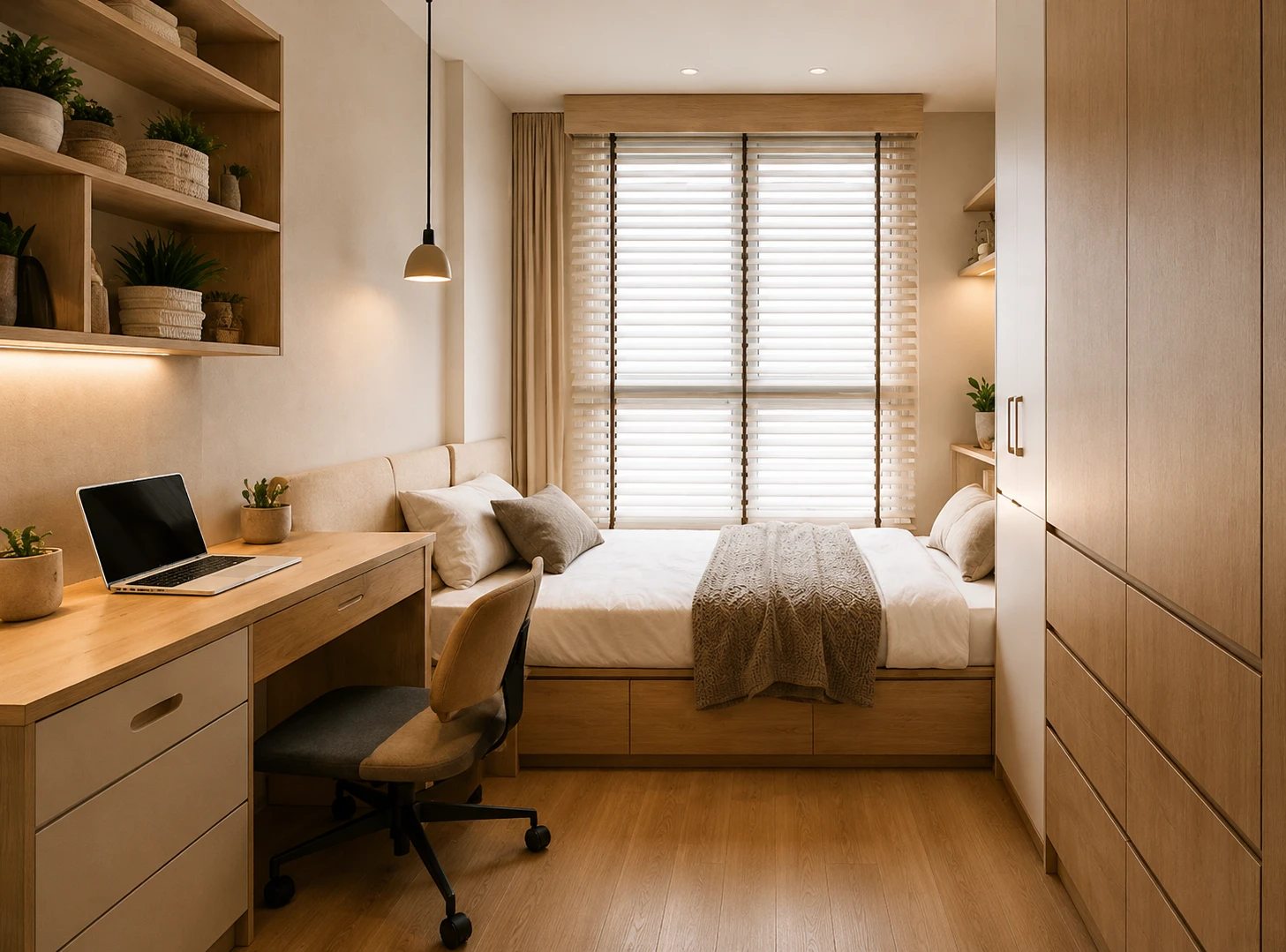
The classic “command position” works because people rest better when the entrance is visible, the bed feels protected and movement in the room is predictable.
- Avoid placing the bed where the door opens directly into the sleeping zone if alternatives are available.
- Keep walking paths around the bed simple and comfortable, especially in smaller HDB bedrooms.
- Use soft lighting and quiet materials to reduce overstimulation before sleep.
- Prioritise wardrobe access and bedside clearance instead of forcing a layout that looks good only on plan.
The useful design principle is not mysticism. It is visibility, predictability and a sense of protection while resting.
Lighting affects mood, circadian rhythm and how spacious the home feels
In many Singapore homes, lighting is treated too late. But lighting changes how finishes look, how relaxed the home feels and how usable each zone becomes after sunset.
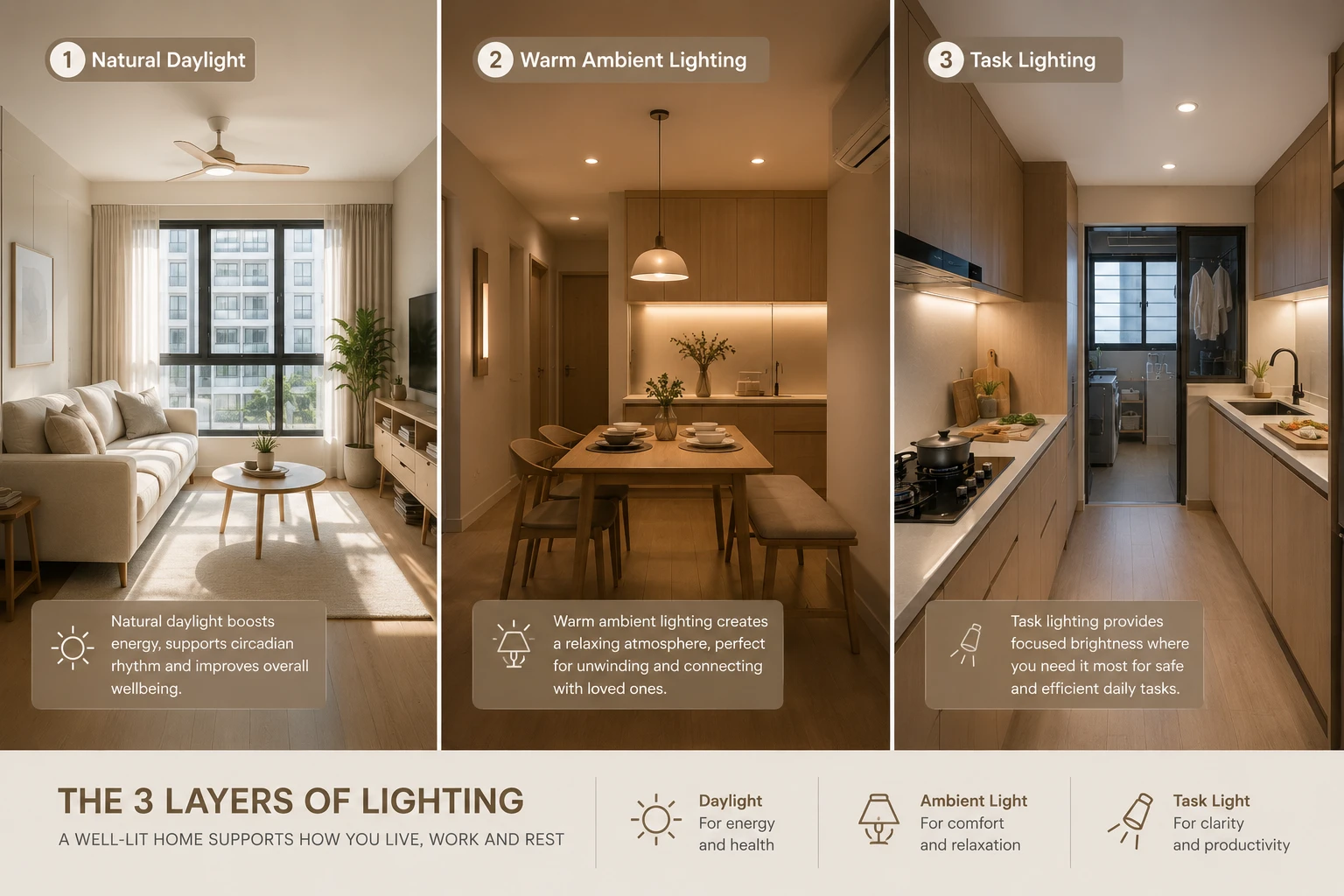
- Warm ambient lighting helps the home feel calmer in the evening.
- Task lighting reduces eye strain at kitchens, vanities, study desks and wardrobes.
- Overly bright white lighting can make beige, taupe and oak finishes feel flat or clinical.
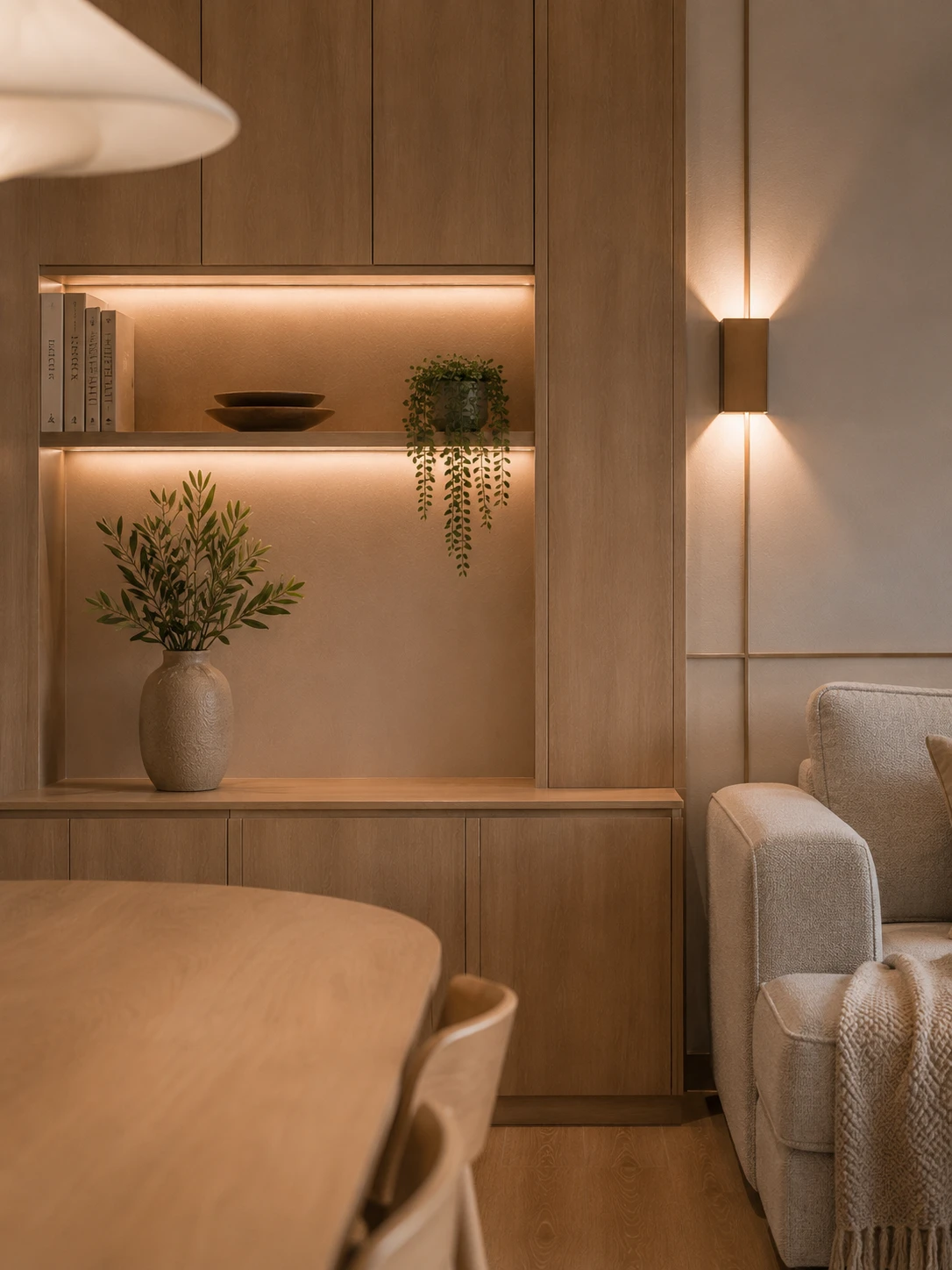
- Subtle indirect lighting should support the architecture, not become dramatic hotel-style cove lighting.
A calm home usually needs more than one ceiling light: ambient light, task light and soft accent light should work together.
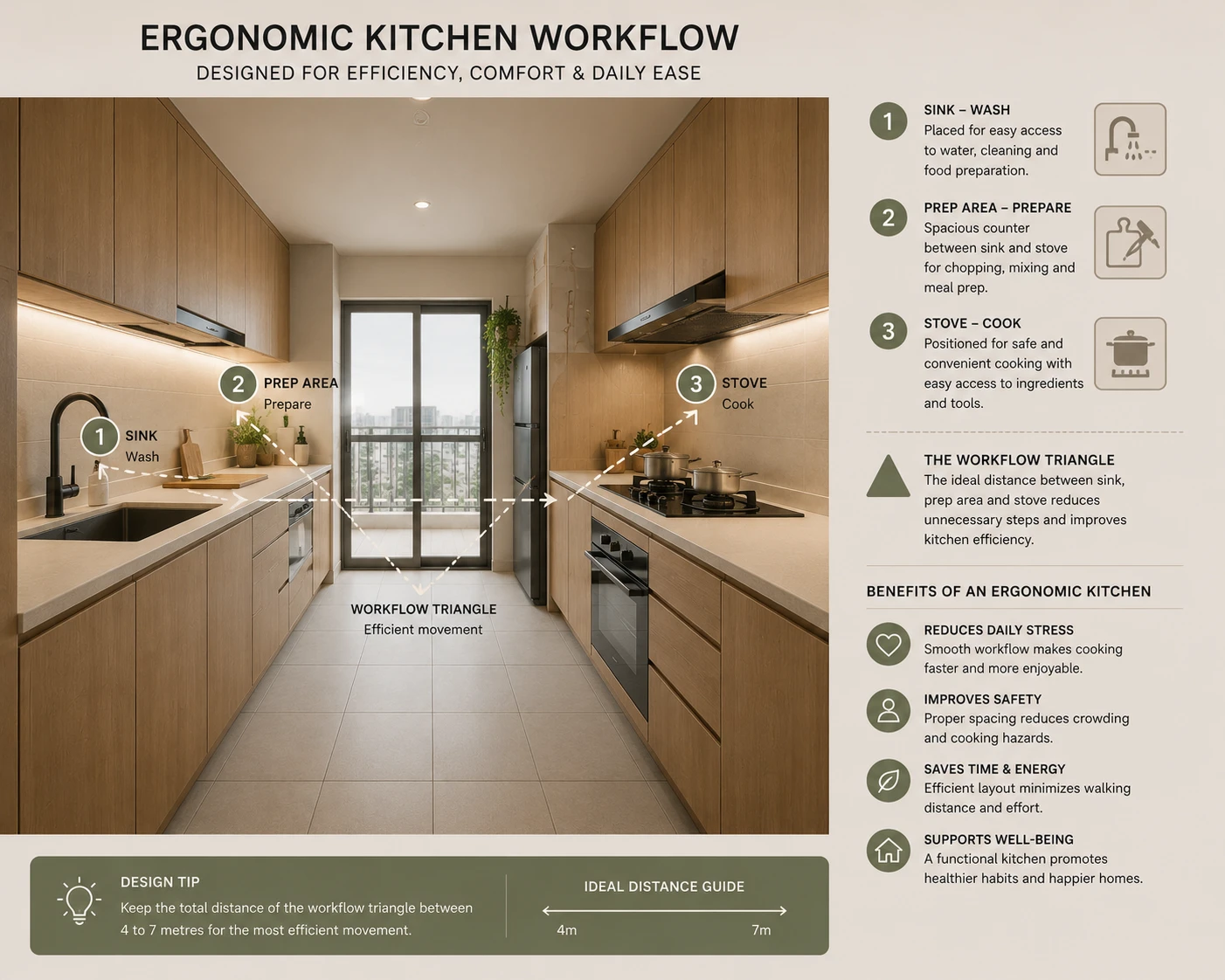
Kitchen workflow is feng shui in its most practical form
A kitchen that looks beautiful but forces awkward movement will create daily irritation. The sink, preparation area, hob, fridge and storage need to support a natural sequence.
- Keep enough preparation space between washing and cooking zones where possible.
- Do not let tall cabinets, fridge doors or island placement block the main working path.
- Plan power points and appliance locations before carpentry confirmation.
- Avoid buying sinks, hobs or taps too early without checking dimensions and installation requirements.
Good kitchen planning reduces repeated movement, counter clutter and daily friction during cooking.
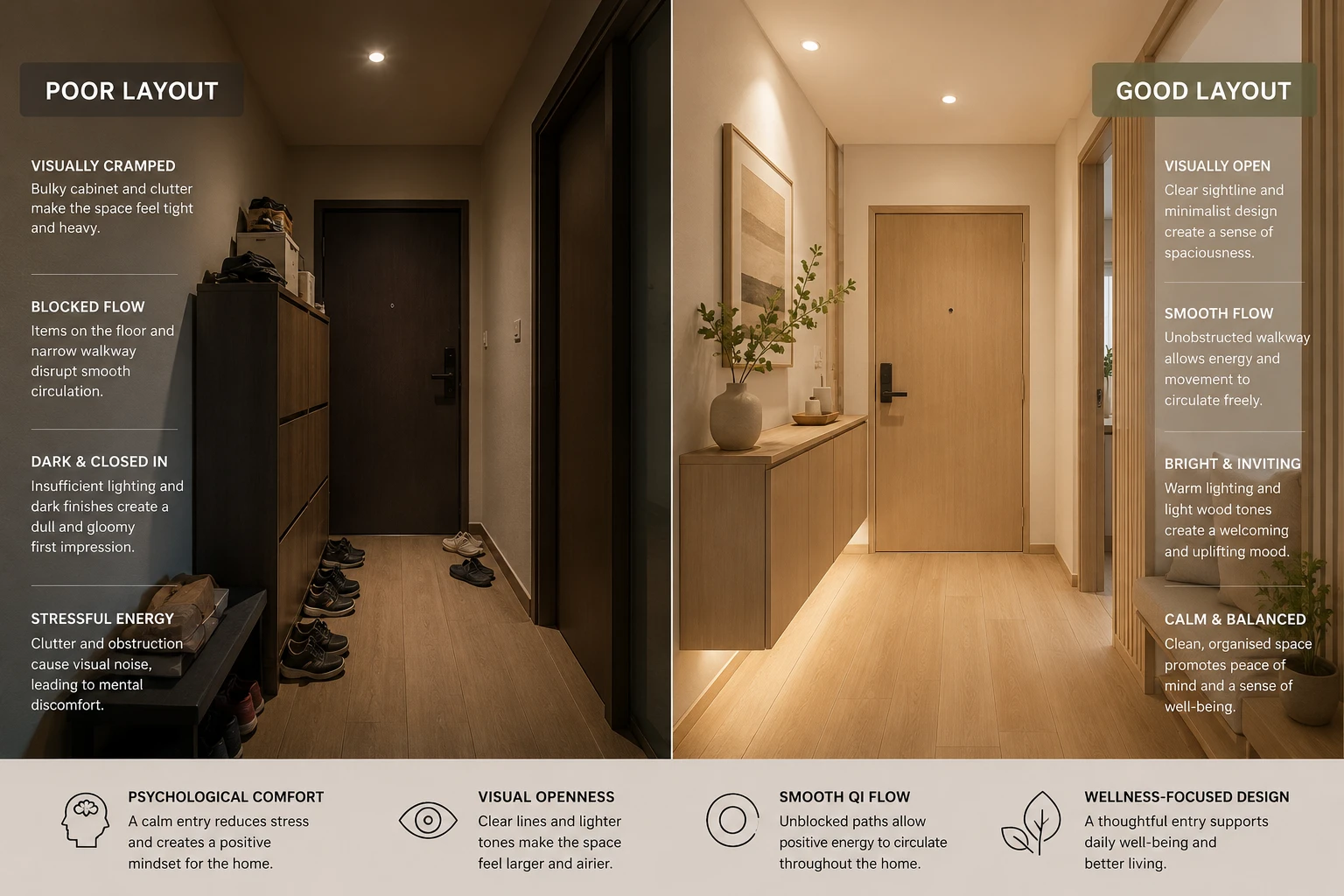
The entryway sets the emotional tone of the home
The first few steps into a home matter. A cramped entryway full of shoes, bags and visual clutter can make the home feel stressful before anyone reaches the living room.
- Plan shoe storage, daily bags and cleaning tools near the entrance without blocking the walkway.
- Use closed storage where clutter builds up quickly.
- Keep the first view into the home calm instead of overloaded with cabinets or loose items.
- For compact HDB entries, shallow cabinets often work better than deep storage that narrows circulation.
Entryway planning is about decompression: where shoes, keys, bags, parcels and daily items go when you enter the home.
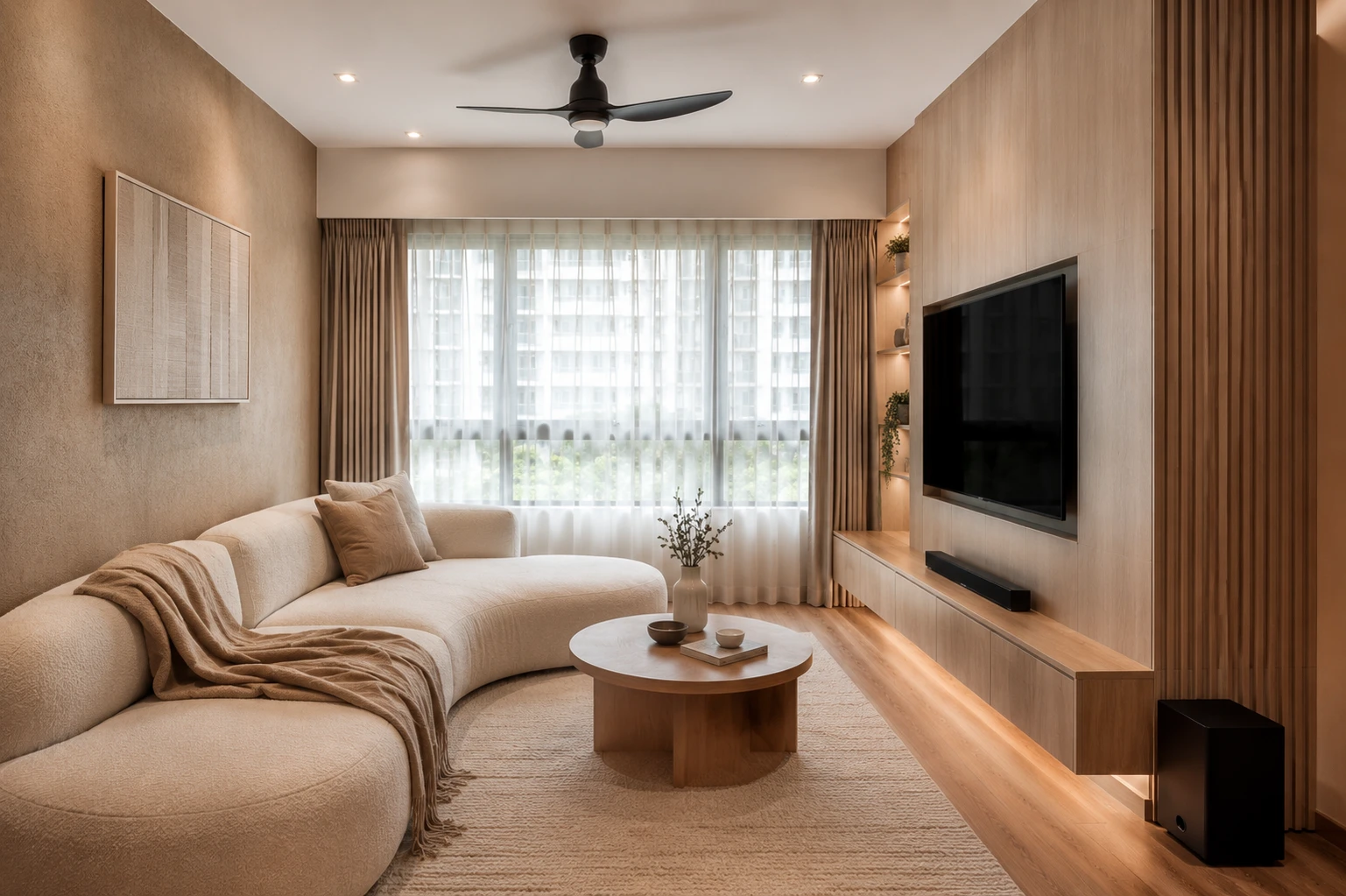
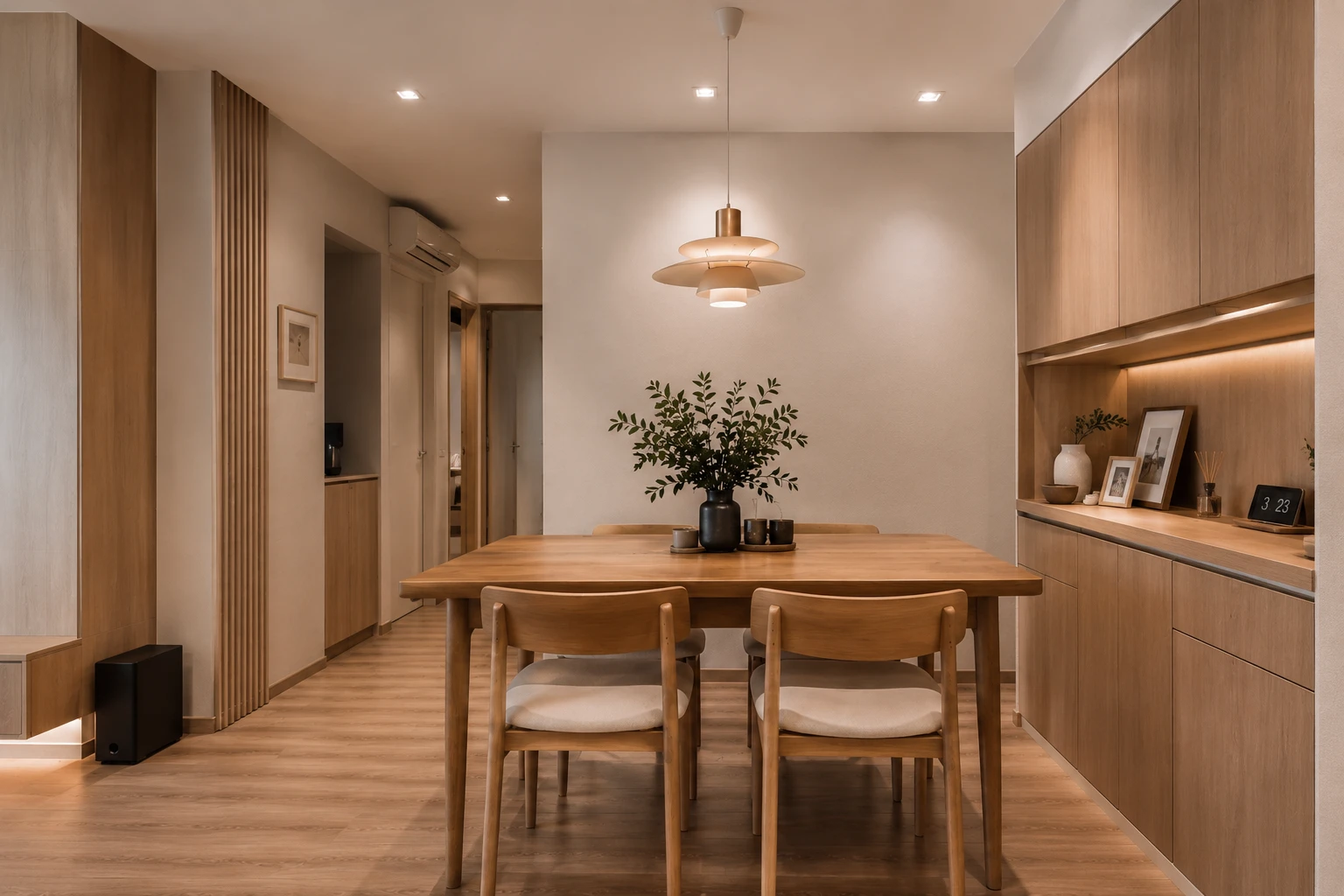
Japandi interiors work because they reduce visual noise
Japandi is popular in Singapore not only because it looks warm and premium. It also supports many wellness design goals: lower contrast, natural textures, concealed storage, softer lighting and furniture that does not overwhelm compact rooms.
Feng shui renovation mistakes Singapore homeowners still make
The most expensive mistakes usually happen when homeowners copy a rule or a trend without checking whether it works for their actual floor plan, habits and budget.
Forcing symbolism over function
A layout should first solve storage, movement, lighting and comfort. Symbolic placement cannot rescue a home that is hard to live in.
Overbuilding carpentry in small rooms
Too much full-height storage can make a compact HDB bedroom or entryway feel compressed. Storage must be balanced with breathing space.
Choosing dark finishes without lighting planning
Dark laminate, dark feature walls and poor light placement can make the home feel heavy, especially in rooms with limited daylight.
Buying overseas items before site checks
Oversized furniture, incompatible taps, wrong appliance voltage or delayed shipping can affect renovation flow and create unnecessary stress.
Ignoring daily maintenance
Open shelving, textured surfaces and decorative niches can look beautiful in renders but become clutter zones if the household routine is not considered.
Practical feng shui renovation checklist
Use this checklist before confirming your layout, carpentry and lighting plan. It keeps the discussion practical and renovation-safe.
Sightlines
Can you see the main door, windows and key movement paths clearly without visual clutter?
Circulation
Are walkways comfortable after furniture, cabinets and appliances are installed?
Storage
Are daily items designed into proper zones instead of left to loose baskets and temporary shelves?
Lighting
Does each area have ambient, task or accent lighting based on how the space is used?
Bedroom calm
Does the bed position feel protected while still allowing practical wardrobe and bedside access?
Kitchen flow
Can washing, preparation, cooking and serving happen without unnecessary backtracking?
Material restraint
Are there too many laminates, colours, trims or feature details competing in one room?
Future regret
Would the layout still feel comfortable after the trend or novelty wears off?
Plan the renovation around how you actually live
A calmer home is planned before renovation starts. These related ID Work Studio resources help you connect wellness design with cost, mistakes, buying decisions and style direction.
Renovation Cost in Singapore
Understand how scope, hacking, carpentry, electrical works and material choices affect your renovation budget.
Read cost guideCommon Renovation Mistakes
See why layout confusion, rushed purchases and unclear decisions often lead to rework and regret.
Avoid mistakesBuying Renovation Items Overseas
Check sizing, compatibility, shipping and warranty risks before buying furniture, lighting, taps or appliances overseas.
Check before buyingRenovation Cost Calculator
Estimate your HDB, condo or resale renovation budget before confirming the full design direction.
Open calculatorHDB Renovation Style Quiz
Explore which renovation style best fits your lifestyle, habits and preferred level of visual calm.
Take style quizFAQ: Feng shui renovation, wellness design and Singapore homes
Short answers for homeowners who want a practical, modern interpretation of feng shui before renovating an HDB or condo in Singapore.
Is feng shui still relevant for modern Singapore homes?+
Yes, if it is treated as practical spatial planning rather than superstition. Many useful feng shui ideas overlap with environmental psychology: clear circulation, comfortable light, visual calm, storage discipline and a sense of safety in bedrooms. For Singapore HDB and condo homes, these ideas are especially useful because compact layouts leave less room for poor planning.
Why do cluttered homes feel mentally stressful?+
Clutter creates visual noise. The brain has to process more objects, colours and unfinished tasks, which can make a home feel heavier and harder to relax in. In renovation planning, the practical solution is not only to declutter after moving in, but to design proper storage, closed cabinets and clear surfaces from the start.
Does bedroom layout affect sleep quality?+
Bedroom layout can affect how safe and calm the room feels. A bed with a clear view of the entrance, comfortable walking space and reduced visual clutter usually feels more restful. This is the practical interpretation of the command position: it supports psychological safety and reduces subconscious alertness before sleep.
What renovation layouts reduce stress in small Singapore homes?+
Stress-reducing layouts usually have clear walkways, concealed storage, soft lighting, calm material palettes and furniture sized correctly for the room. In HDB and compact condo layouts, avoiding oversized carpentry and keeping movement paths open is often more important than adding more decorative features.
Is Japandi design good for wellness-focused interiors?+
Japandi design works well for wellness-focused interiors because it uses warm neutrals, natural textures, low visual contrast and practical storage. For Singapore homeowners, it can create a premium but calm home without making the space feel overly decorative or visually busy.
Does lighting really affect mood and well-being?+
Yes. Lighting affects how a room feels, how finishes appear and how comfortable the home is at different times of day. Warm ambient lighting supports evening calm, task lighting improves usability and layered lighting prevents the flat, harsh feeling that often happens when a room relies on only one bright ceiling light.
Can poor renovation planning affect mental wellness?+
Poor planning can increase daily frustration. Examples include blocked walkways, insufficient storage, dark rooms, awkward kitchen workflow and furniture that is too large for the space. These issues may seem small during design, but they affect daily routines after moving in.
What are the most common feng shui renovation mistakes in Singapore?+
Common mistakes include focusing too much on symbolic items, copying Pinterest layouts that do not fit HDB proportions, using dark finishes without lighting planning, overbuilding carpentry and buying furniture or fittings before checking site dimensions. Practical comfort should come before decoration.
Should feng shui be considered before renovation starts?+
Yes. If feng shui is interpreted as layout, lighting, storage and flow, it should be discussed before carpentry and electrical plans are finalised. It is much easier to plan calm circulation, bedroom placement, lighting points and storage zones before renovation begins than to correct them after handover.
Design a home that supports how you live
A well-designed Singapore home should not only look beautiful. It should support better rest, smoother routines, clearer storage and long-term emotional comfort.