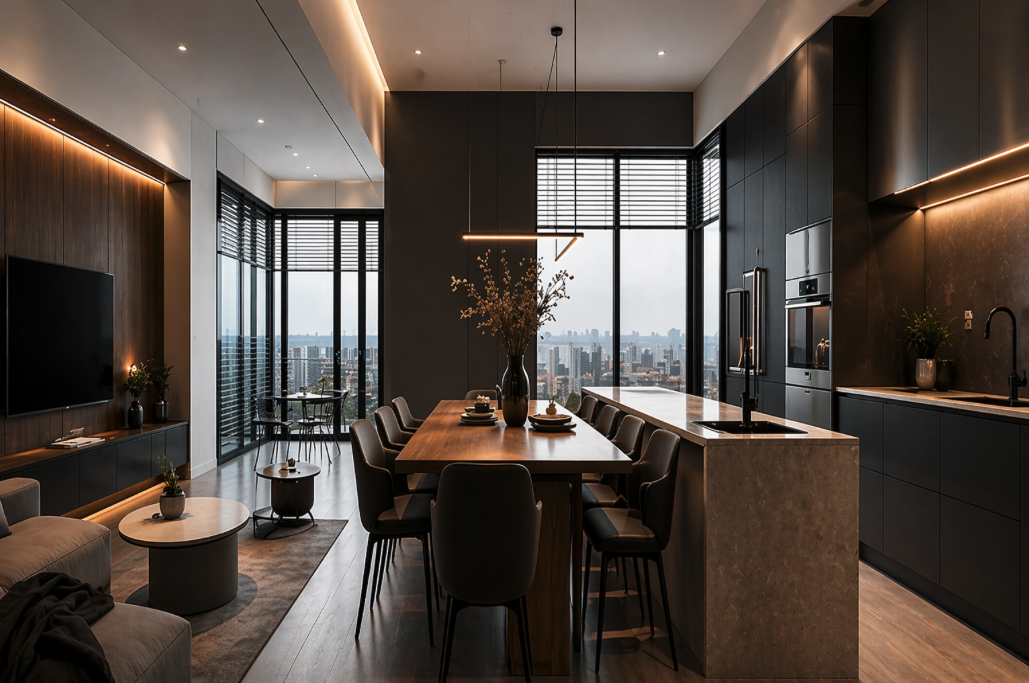
In 2026, renovation budgets in Singapore typically range from $40,000 to $75,000 for BTO flats, $55,000 to $98,000 for resale HDB flats, and $40,000 to $105,000+ for condos and private apartments. The final cost depends on scope, design complexity, material grade, carpentry, wet works and the condition of the property.
How much does renovation cost in Singapore?
In 2026, most homeowners in Singapore can expect renovation budgets to fall within these broad ranges:
| Home Type | Typical Budget Range |
|---|---|
| 3-room HDB (BTO) | $40,000 – $52,000 |
| 4-room HDB (BTO) | $50,000 – $60,000 |
| 5-room HDB (BTO) | $60,000 – $75,000 |
| 3-room HDB (Resale) | $55,000 – $68,000 |
| 4-room HDB (Resale) | $70,000 – $81,000 |
| 5-room HDB (Resale) | $80,000 – $98,000 |
| Condo / Private Apartment | $40,000 – $105,000+ |
In simple terms, many homeowners in Singapore end up in one of three broad tiers:
- $30K–$50K for a more basic renovation
- $50K–$80K for a more standard, well-rounded renovation
- $80K+ for a premium, design-led renovation with more customisation
What actually drives renovation cost?
Most homeowners assume renovation cost is mainly about floor area. In reality, the strongest cost drivers are usually carpentry, wet works, material selections and how ambitious the design direction is.
1. Carpentry

Carpentry is often one of the largest cost components in a Singapore renovation. This includes kitchen cabinets, wardrobes, TV consoles, storage walls, study areas and feature-built joinery.
But carpentry cost is not just about quantity. It is heavily affected by design complexity and material choice. For example, curved corners or rounded edges require more specialised fabrication and finishing than standard sharp-corner cabinetry, so they cost more.
Laminate selection also influences pricing. Most laminates in Singapore come in 4ft x 8ft sheets, while some higher-end options are available in 4ft x 10ft sheets. Larger sheets allow for cleaner, more seamless carpentry because they reduce visible break lines, but they also increase material cost.
2. Kitchen cabinet systems and worktops
Kitchen renovation is one of the most cost-sensitive areas in any home. The cabinet bodies, door finishes, backing area and worktop material all affect price.
One key factor is the worktop selection. In the past, quartz was the more common choice. Today, more homeowners are moving toward sintered stone because of its durability, heat resistance and more premium look. In most cases, sintered stone comes at a higher price point than standard quartz.
Another cost factor is the backing area — the space between the top and bottom kitchen cabinets. This area may be finished in tiles, glass, quartz or sintered stone. Once the backing is upgraded to a more premium full-height surface, both material and labour costs go up.
3. Wet works
Wet works typically include bathrooms, kitchen tiling, waterproofing, screeding and plumbing-related coordination. These items can take up a meaningful portion of the budget, especially in resale flats where existing conditions are older or less predictable.
4. Tiles, marble and country of origin
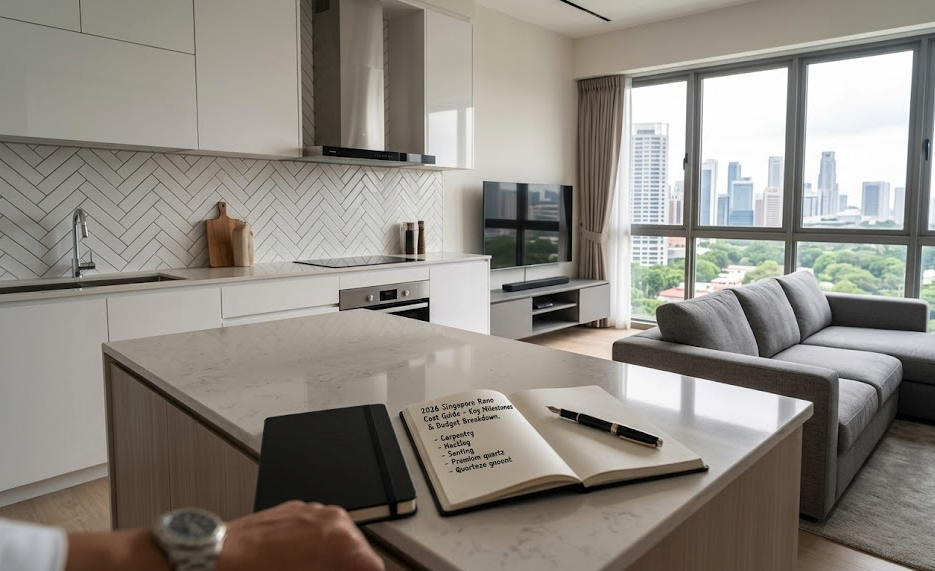
Tile and stone pricing is influenced by origin, finishing and size. Materials imported from Italy, Spain and other European countries generally cost more than tiles from Malaysia or China. The price difference often comes from manufacturing quality, brand positioning and finish consistency.
Tile size also affects cost. Many homeowners use 600 x 600 mm tiles, while some prefer 600 x 1,200 mm or even larger formats. Larger tiles usually create a cleaner and more premium visual effect, but they also require more precise handling and more skilled labour to install properly. As a result, both the tile price and the laying cost tend to increase when tile sizes become larger.
5. Electrical and plumbing upgrades
Additional lighting points, concealed wiring, replacement of older systems and new plumbing runs can all add to the final cost — especially for resale flats.
BTO vs resale: why costs differ so much
One of the biggest cost misunderstandings in Singapore is the difference between a BTO renovation and a resale renovation.
BTO renovation
BTO flats usually start as a relatively blank canvas. There is generally less demolition, fewer concealed issues and lower site uncertainty. That helps keep renovation budgets more controlled.
Resale renovation
Resale flats often come with hidden infrastructure work before aesthetic upgrading can even begin. That may include hacking dated finishes, replacing older wiring, changing water pipes, waterproofing wet areas and levelling surfaces after demolition.
In practice, resale renovation can easily cost 20% to 40% more than a comparable BTO renovation because more of the budget goes into making the unit workable before the design layer is added.
A simple way to think about it
If a BTO renovation sits around $55,000, the resale equivalent can quickly move into the $70,000 to $80,000 range once hacking, rewiring, plumbing replacement and waterproofing are added in.
Where homeowners overspend
Based on common renovation patterns in Singapore, homeowners usually overspend in the same few areas:
- Overbuilding carpentry that looks impressive on paper but is not truly needed for daily use
- Following trends too aggressively without thinking about maintenance, practicality or how quickly those details may date
- Changing layout decisions too late, which often leads to variation orders and rework
- Choosing the lowest quotation without understanding material specifications, omissions or hidden cost exposure later
How to plan your renovation budget more realistically
A better renovation budget usually starts with clarity, not guesswork.
Start with lifestyle needs before design references
Set a budget range, not a single fixed number
Prioritise layout, function and durability first
Keep decorative upgrades proportionate to daily use
Allow for site realities, especially in resale units
Reserve a contingency buffer of 10% to 15%
Instead of saying, “I want to spend $50,000,” it is usually more practical to think in ranges — for example, “I am comfortable between $50,000 and $65,000, depending on design priorities.” That gives the project more room to stay realistic.
A more realistic expectation for Singapore homeowners
In the current market, many homeowners end up around these practical ranges:
- $50,000–$70,000 for a comfortable, well-designed home
- $70,000–$90,000 for more customised interiors and stronger material upgrades
Budgets below that range are still possible, but they usually involve more compromise in carpentry scope, material choice, or wet-work ambition. Budgets above that range often reflect design ambition rather than basic necessity.
Final perspective
Renovation cost in Singapore is not only about square footage or headline price. It reflects how you live, how much customisation you want, how refined the material palette is and how much hidden groundwork the property requires.
Most homeowners do not regret spending more when the planning is thoughtful. More often, they regret unclear budgeting, weak early decisions and not understanding where the real cost drivers were from the start.
A better renovation does not always mean the most expensive one. It usually means a project where the budget, design priorities and day-to-day lifestyle have been aligned properly from the beginning.
Renovation cost FAQ
How much should I budget for a 4-room HDB renovation in Singapore in 2026?+
For a 4-room HDB in Singapore, a practical 2026 renovation budget is usually around $50,000 to $60,000 for a BTO and $70,000 to $81,000 for a resale flat. The resale range is higher because hacking, disposal, rewiring, plumbing replacement and waterproofing are more common.
Why is resale renovation more expensive than BTO renovation?+
Resale renovation usually costs more because the contractor must first remove old finishes, check existing wiring and plumbing, repair uneven surfaces, redo waterproofing in wet areas and handle more site-condition risks. These works happen before the new design finishes are installed.
What are the biggest renovation cost drivers in Singapore homes?+
The biggest cost drivers are usually carpentry, kitchen worktops, bathroom wet works, tile selection, electrical rewiring, plumbing upgrades and design complexity. Full-height cabinets, curved carpentry, large-format tiles and sintered stone surfaces can push the budget up quickly.
Is $50,000 enough for a home renovation in Singapore?+
$50,000 can be enough for a practical BTO renovation or a lighter resale scope, but it may not be enough for a full resale renovation with extensive hacking, rewiring, plumbing, carpentry and premium finishes. The key is to decide which areas matter most before confirming the scope.
How much buffer should homeowners set aside for renovation?+
A sensible buffer is 10% to 15% for BTO or newer homes and 15% to 25% for resale homes. Older resale units have more unknowns, especially after hacking starts and concealed wiring, pipe condition or floor levels become clearer.
Does renovation cost include furniture, appliances and curtains?+
Not always. Many renovation quotations cover built-in works such as carpentry, masonry, electrical, plumbing, painting and ceiling works. Loose furniture, appliances, curtains, blinds, mattresses and decorative lighting may be separate, so homeowners should check the quotation line by line.
Why do quotations from different renovation companies vary so much?+
Quotations can vary because of material specifications, carpentry dimensions, worktop grade, tile size, electrical quantity, wet-work scope, warranty responsibility and whether important items are omitted. The cheapest quote is not always cheaper after variations are added.
Should I choose quartz or sintered stone for my kitchen worktop?+
Quartz is still a practical and common option for many Singapore homes. Sintered stone usually costs more but gives a more premium look and better heat resistance. The right choice depends on cooking habits, design expectations and how much of the budget is allocated to the kitchen.
Can I reduce renovation cost without making the home look cheap?+
Yes. Keep the layout practical, avoid unnecessary built-in carpentry, use feature finishes only where they are most visible, choose durable mid-range materials and avoid late design changes. Good space planning often matters more than using the most expensive material everywhere.
When should I ask for a renovation quotation?+
Ask for a quotation after you have a floor plan, rough design direction, budget range, preferred move-in date and clear priorities. For resale homes, a site visit is important because existing conditions can change the cost significantly.
Do HDB renovation works need approval?+
Some HDB renovation works require approval, especially hacking, wet-area works, wall changes and certain plumbing or window-related works. Homeowners should work with an HDB-registered renovation contractor and confirm approval requirements before starting site work.
How can I avoid renovation cost overruns?+
Avoid cost overruns by confirming the scope early, checking quotation inclusions, planning electrical and carpentry properly, avoiding last-minute material changes and keeping a realistic contingency buffer. Most overruns come from unclear scope or late changes, not from one single item.
Related renovation guides
Plan your renovation with clearer cost, timeline and risk control
If you are comparing renovation budget against the actual project schedule, read our HDB renovation timeline guide to understand approval, delivery sequencing, carpentry lead time and common move-in delays.
To avoid unnecessary variation orders, also read our renovation mistakes Singapore homeowners should avoid before confirming materials, layout and quotation items.
For a quick starting estimate, use the Singapore renovation cost calculator before sending your floor plan for a detailed contractor quotation.
Renovation Budget Planning
Want a more accurate renovation estimate?
Send us your floor plan, property type and preferred renovation scope. We can help you check whether your budget is realistic before you commit to materials, carpentry and site works.
Next Article