How long does HDB renovation take?
In Singapore, most renovation timelines fall within these ranges:
- BTO: 8–12 weeks
- Resale: 10–16 weeks
BTO flats are faster due to fewer structural changes, while resale units require additional work such as hacking, rewiring and plumbing upgrades.
Typical renovation timeline breakdown
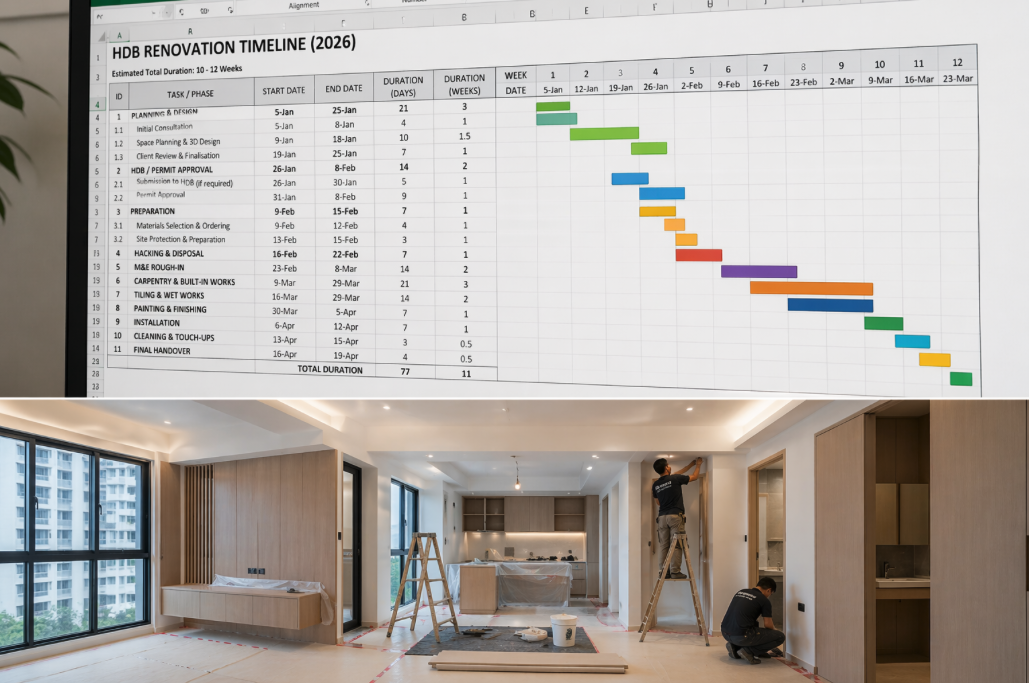
1. Planning & Design (2–4 weeks)
Layout planning, design concept, quotation and material selection.
2. Permit Approval (1–3 weeks)
Submission of HDB permits, especially for hacking and wet works.
3. Hacking & Demolition (3–7 days)
Mainly for resale units.
4. Wet Works (2–3 weeks)
Tiling, waterproofing and floor preparation.
5. Carpentry Production (3–5 weeks)
Fabrication is done off-site and often overlaps with other phases of the renovation timeline.
6. Installation (2–3 weeks)
Carpentry, electrical and painting.
7. Final Touch & Handover (1 week)
Defect rectification and cleaning.
When can you actually move in?
Most homeowners cannot move in immediately after completion. You should allow an additional 1–2 weeks for cleaning, airing and final adjustments.
Why renovations get delayed
Project sequencing issues
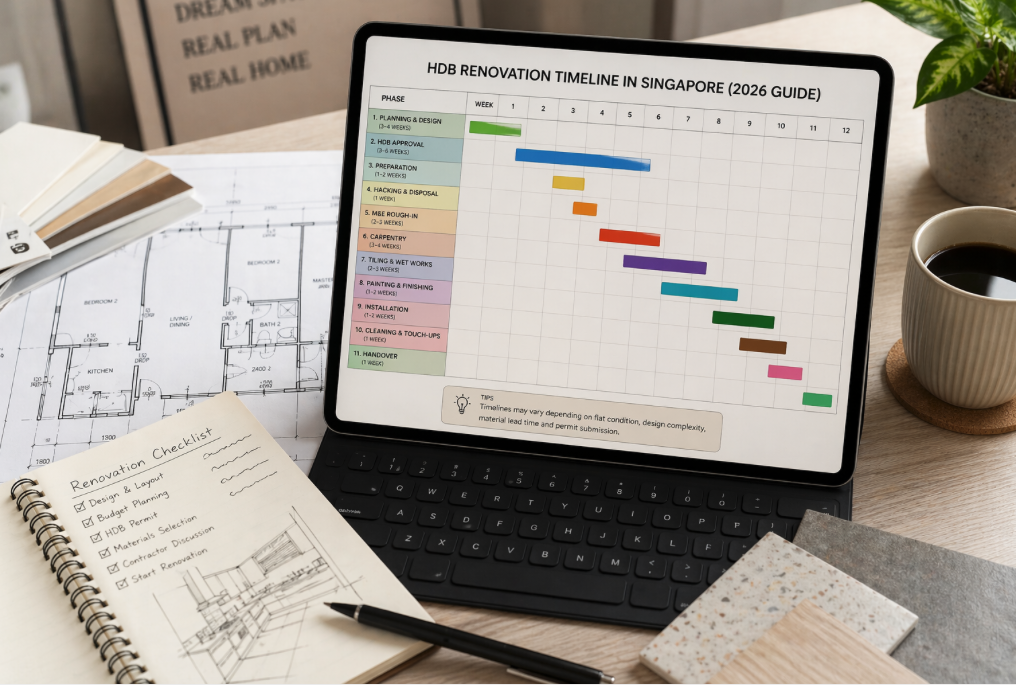
Renovation follows a Gantt chart sequence. If one stage is delayed, everything after it shifts. For example, if aircon piping is not completed, tiling and carpentry may be delayed as well.
One common example is the kitchen sink. If the project uses an undermount sink, the sink needs to be installed before the countertop can be placed. If the sink is delayed, the kitchen installation is delayed too.
External contractors
Engaging separate vendors often leads to coordination issues and schedule misalignment. If one external contractor cannot keep to the project sequence, the rest of the work can be pushed back.
Owner-supplied materials
Items sourced from overseas can be delayed or incorrect, which stops installation work. This has become increasingly common when homeowners order kitchen systems, taps, accessories or fixtures from overseas platforms.
Late decisions & design changes
Indecision, adding features late or changing cabinet designs midway can cause major delays. When clients continue exploring materials for too long, or cannot agree on finishes, the timeline is affected because drawings, procurement and coordination cannot be finalised.
Small changes can also create large ripple effects. If a cabinet layout is revised after lighting or electrical points have already been planned, those drawings and sequences may need to be redone.
How to avoid delays
Finalise design early
Understand project sequencing
Confirm critical materials early
Avoid too many contractors
Align decisions early
Related HDB renovation guides
Plan your HDB renovation with clearer budget and fewer delays
Before confirming your scope, compare your expected timeline with our Singapore renovation cost guide so you can plan budget, carpentry, wet works and material decisions together.
To avoid delays from late decisions, owner-supplied items or unclear quotation scope, read our renovation mistakes Singapore homeowners should avoid before renovation work starts.
Final perspective
Renovation delays are rarely caused by construction itself. More often, they come from decisions, coordination and planning. When the sequence is understood clearly and key materials are confirmed early, the move-in timeline becomes much more predictable.
HDB renovation timeline FAQ
How long does HDB renovation usually take in Singapore?+
Most HDB renovations in Singapore take about 8 to 12 weeks for a BTO flat and 10 to 16 weeks for a resale flat. Resale projects usually take longer because hacking, rewiring, plumbing checks, waterproofing and making-good works are more common.
Why does resale HDB renovation take longer than BTO renovation?+
Resale HDB renovation takes longer because the existing condition must be removed and checked first. Old tiles, cabinets, wiring, pipes, uneven floors and hidden defects can affect the sequence before new renovation work starts.
When should I start planning before collecting my HDB keys?+
Start planning 4 to 8 weeks before key collection if your floor plan is ready. This gives time to confirm layout, budget, material direction and quotation so the project can move faster after site measurements and HDB approval.
Which HDB renovation works commonly need approval?+
Hacking, wet-area works, certain wall changes, window-related works and some plumbing works may need HDB approval. A HDB-registered renovation contractor should check the scope before work starts.
Can carpentry start before tiles and electrical work are completed?+
Carpentry measurement usually depends on completed site conditions, especially after tiling, ceiling and electrical points are confirmed. Fabrication can overlap with site work, but wrong early measurements can cause fitting issues.
What causes the most common HDB renovation delays?+
Common delays include late material selection, delayed HDB approval, owner-supplied items arriving late, changes to carpentry layout, aircon piping coordination, countertop measurement delays and external vendor scheduling issues.
Can I move in immediately after renovation handover?+
It is better to allow 1 to 2 extra weeks after handover for cleaning, airing, minor touch-ups, furniture delivery and appliance setup. Moving in too tightly after completion can make defect checking and adjustment harder.
How do Taobao or overseas purchases affect renovation timeline?+
Owner-supplied overseas purchases can delay renovation if items arrive late, arrive damaged, have wrong dimensions or miss fittings. Items such as sinks, taps, lights and accessories should be ordered early and checked before installation dates.
Should I confirm kitchen appliances before carpentry starts?+
Yes. Hob, hood, oven, fridge, sink and dishwasher dimensions should be confirmed before carpentry fabrication. Late appliance changes can affect cabinet sizes, ventilation space, electrical points and countertop cut-outs.
How can homeowners keep the renovation timeline under control?+
Confirm the layout early, avoid late design changes, decide materials before site work, appoint one main coordinator, check long-lead items and keep the renovation sequence clear. Most delays come from decision and coordination gaps.
How long should I buffer for defects and touch-ups?+
A practical buffer is 1 week for smaller BTO projects and 1 to 2 weeks for larger or resale projects. This allows time for paint touch-ups, carpentry alignment, silicone works, cleaning and small rectifications.
What should I prepare before asking for a HDB renovation timeline estimate?+
Prepare your floor plan, key collection date, target move-in date, renovation scope, appliance list, preferred materials and any owner-supplied items. These details help the contractor give a more realistic timeline.
HDB Renovation Planning
Need a realistic move-in timeline?
Send us your floor plan, key collection date and target move-in period. We can help you review the renovation sequence, likely approval items and practical timeline before work starts.
Next Article